

Commercial real estate is always changing, pushed by the need for faster building, better efficiency, and more sustainable practices.
Because of this, prefabricated and modular construction have become more popular. These building methods, once used mostly for simple or temporary projects, are now being used to create offices, retail spaces, hospitals, and warehouses.
Traditional construction often struggles with delays caused by weather issues, labor shortages, and complicated logistics. This means projects can take longer and cost more than expected.
Prefab and modular construction offer a different approach-large parts of buildings are made in a factory and then brought to the building site. This not only speeds up the process but can also help control costs, improve quality, and have less impact on the environment.
As companies and builders want faster, more reliable projects, off-site construction is becoming a popular choice. Focusing on building new, efficient structures also lets resources be used for important repairs and upkeep, such as Local Law 11 repairs and other facade work that keeps city buildings safe and looking good.
But are these ways of building just a fad, or will they shape how commercial buildings are made in the years ahead?
Let’s look at what prefab and modular construction mean, what their pros and cons are, the technology supporting them, and what affects their use in commercial real estate.
What Are Prefab and Modular Construction in Commercial Building?
Though people sometimes use “prefabrication” and “modular construction” as if they are the same, they are actually a bit different. Both involve making parts of buildings away from the site, in a factory, before moving them to where the building will stand.
This shift from building everything on-site is what makes these methods powerful and potentially game-changing.
How Do Prefab and Modular Methods Work?
Prefabrication means making different building pieces in a factory. This can involve things like trusses, wall panels, or more complicated parts. The key point is that these pieces are built off-site and then put together at the final location. It’s a bit like building with specially made LEGO bricks instead of starting from scratch at the site.
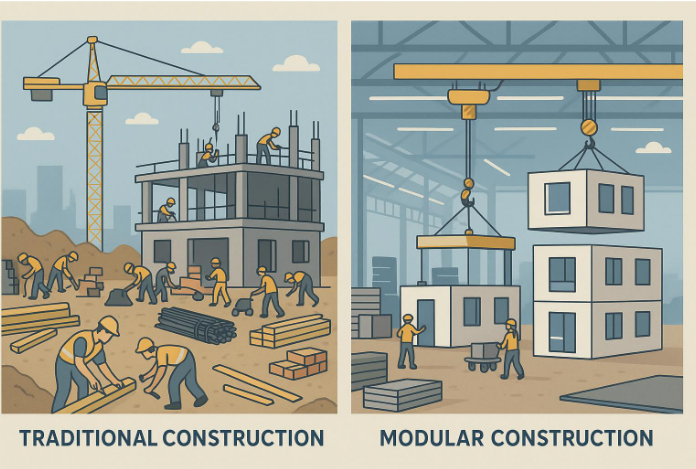
Modular construction is a more specific kind of prefabrication. Here, whole sections of a building-like rooms-are put together in the factory. These modules can include finished interiors, plumbing, and wiring. After these modules are complete, they’re taken to the site and lifted into place, much like stacking big blocks.
With this method, a lot of the construction is finished before anything even arrives at the site, making for a much quicker building process.
How Do Prefab, Modular, and Traditional Construction Differ?
The main difference is where and how the building comes together. Traditional construction mostly happens at the building site, with workers and materials brought in as needed. This makes it very sensitive to problems like bad weather and requires a lot of on-site planning and coordination.
Prefabrication lets work happen away from the site, which can make things faster and more controlled for those parts. Modular construction goes further by making large, ready-to-use chunks or rooms off-site. This lets foundation work happen at the same time as module building, saving time. In traditional construction, each step must happen one after the other. In modular, much of the job can happen all at once.
What Types of Prefab and Modular Commercial Buildings Are Popular?
Prefab and modular methods are used in many types of commercial buildings. Pre-Engineered Metal Buildings (PEMBs) are commonly used for factories, warehouses, and stores. These are fully designed, made in the factory, then quickly put together on location.
Modular steel buildings are another example, with factory-built steel sections. Offices, hotels, medical centers, and schools are using modular methods more and more. These methods make it possible to choose different layouts and appearances, moving beyond the boring, identical look of older prefab structures.
Some smaller projects or additions use steel building kits-collections of prefab parts that are easy to assemble.
What Are the Main Advantages of Prefab and Modular Construction?
Prefab and modular methods are growing in popularity for good reasons. They help solve many common building challenges, including project delays, high costs, safety issues, and design limits. Their benefits make them a strong choice for the future.
Speeds Up Construction and Increases Efficiency
These methods can greatly reduce construction time. Since work on the site and factory modules can happen at the same time, projects move much faster. Construction times can be cut in half, letting businesses move in and start earning money sooner.
Work in the factory continues no matter the weather, and surprises on-site have less impact on the schedule. For instance, hospitals have been built with modular methods in half the time it would take using standard construction.
Saves Money and Controls Costs
These faster, smoother processes also save money. Shorter building times mean fewer hours spent by workers and less time managing the site. Factories can buy materials in bulk and waste less, cutting costs even further. Some estimates say modular building can save up to 20% overall.
Even if a single prefab module costs about the same as something built on-site, the whole project costs less when waste and delays are avoided.
Reduces Environmental Impact
Sustainability is very important today, and prefab or modular methods often create much less waste. Factories can use materials more carefully, reducing leftovers by as much as 90% compared to regular construction.
Many prefab projects use recycled or responsibly sourced materials. Special panels used in this way offer good insulation and energy savings, helping buildings use less power after they’re finished. Projects like Seattle’s Bullitt Center show how modular methods can build greener buildings.
Makes Work Safer
Construction can be risky, but working in a factory is much safer than a regular job site. Most of the work takes place at ground level or in controlled conditions, reducing dangers like falls or weather-related accidents.
There is still some risk during final assembly, but this phase is shorter and simpler, leading to fewer job site injuries overall.
Produces High-Quality, Durable Buildings
Some people think prefab means lower quality, but actually, factory conditions allow better inspection and control at every step. Every piece is checked carefully, leading to more consistent results than possible on a busy, outdoor job site.
Materials are protected until they are installed, avoiding damage from rain or sun. Steel, a favorite material for modular buildings, is also long-lasting and needs less maintenance over time.
Allows More Flexible and Custom Designs
Today’s prefab and modular construction can produce a wide variety of looks and layouts. Modern techniques can create complex architecture, and different outside finishes-like brick or glass-can be added for the look builders want.
Modular projects can be adjusted or expanded as needed. Office, school, or hospital layouts can match the exact needs of owners. Projects like New York’s Phipps Houses show how these methods can create attractive, unique buildings.
What Are the Downsides and Challenges?
While prefab and modular have many benefits, they also have challenges that need to be solved to become even more common in commercial building.
Myths About Quality and Strength
People often still believe prefab buildings are weak or temporary. These ideas come from the past, when such buildings were less sturdy. It’s important to show clients and the public that today’s modular buildings, especially those made of steel, are strong and long-lasting.
Highlighting real successes and reliable modular buildings can help change old opinions.
Design Limits and Building Code Issues
While design options have grown, very unique or complex buildings might still be easier to build the old way. Modular construction also requires a lot of planning in the early stages, which some builders may find limiting.
Getting permits can also be tricky, since rules are usually written for traditional construction. Builders must check that factory-made parts meet all local codes, and this can require extra planning and teamwork with local authorities. Thankfully, as modular methods become more common, more places are updating their rules to fit.
Transportation and Site Problems
Moving large modules to the building site is a major task. It may need special trucks, planned routes, and sometimes closing streets, which can be expensive. Protecting the modules from damage while moving them is also necessary.
The building site must be easy to reach and have enough space for cranes and storage. If the site is small or hard to access, costs and difficulties can go up.
Effects on Labor and Jobs
Shifting construction work into factories changes the job skills needed. There is less demand for traditional trades at the site and more need for factory workers and technicians. This calls for retraining programs for existing workers.
Some traditional construction workers or unions may be slow to accept these changes. Building good working relationships between site and factory workers is important for progress.
How Do Technology and Innovation Support Modern Modular Building?
Technology is a key part of making prefabricated and modular methods successful. From computer modeling to new materials, technology is pushing these building styles forward.
Advanced Manufacturing and Digital Design Tools
Factory environments use robots and machines to make building parts with great precision. This reduces mistakes and makes everything fit together smoothly.
Programs for computer-aided design (CAD) and manufacturing (CAM) help move from planning to building quickly. Automation in the factory makes production faster and more reliable, reducing mistakes and saving money.
Using Building Information Modeling (BIM)
Building Information Modeling (BIM) allows teams to create detailed 3D models of the whole building, including every part and system. This clear picture helps everyone involved see how the modules fit together.
BIM can spot problems, like pipes or wires crossing in the wrong place, before building starts. It also lets teams plan how the building will be put together, making sure modules fit perfectly when they get to the site.
Sustainable Materials in Prefab Construction
New materials are being used to improve prefab and modular buildings. Besides regular materials, new panels and insulation types help lower energy use and last longer. Steel is often used because it can be recycled and is strong.
There is also more focus on materials that help buildings handle disasters like floods or earthquakes. Panels made from foam, minerals, or glass fibers can create safer, more energy-efficient buildings.
What Affects How Widely Prefab and Modular Building Are Used?
Even with all their benefits, the use of prefab and modular methods in commercial real estate depends on market changes, what clients want, and how projects are handled.
Market Trends and Investment
The modular construction market is growing each year. Experts predict that it will reach $130 billion by 2025, with a steady annual growth rate. Developers and investors are putting more money into prefab and modular, seeing strong potential for profit and reliability.
The push for quick project delivery, steady prices, and green building practices favors prefab and modular construction. As these trends keep growing, more commercial projects are likely to use these methods.
What Clients and Stakeholders Want
Client opinions matter. Although some still have doubts, more and more clients are seeing the clear benefits, especially fast building times and possible cost savings. Businesses that need to grow quickly-like shops, hotels, and data centers-are often the first to use modular methods.
Developers and investors often look at prefab options to save time and avoid risky delays. Sharing information about quality, flexibility, and lasting value helps convince more people to choose modular buildings.
Best Ways to Plan a Modular Project
Prefab and modular projects work best with careful planning and good teamwork. Start by choosing an experienced modular builder when designing the project. Keep lines of communication open between the factory and the site, and plan carefully how and when to move modules. Using tools like BIM helps keep everything organized.
Modular methods are most effective for projects with repeated features like hotels or apartment buildings. That said, growing design flexibility is letting modular be used in more types of buildings. Regular and clear communication among everyone involved is important for a smooth project.
Will Prefab and Modular Methods Lead the Future of Commercial Building?
With all the advantages in speed, cost, green building, and quality-and with technology only improving-prefab and modular construction are likely to become a major part of how commercial buildings are made. They solve many problems found in traditional building methods.
Current Outlook
The trend in construction is moving more toward off-site and industrial-style building. More clients and rules expect quick, green, and cost-friendly projects. This is good news for prefab and modular builders.
Even though there are still some problems, such as old rules and the need for new job skills, solutions are being developed. Each successful modular project helps build trust in these methods.
Chances for Growth and Sustainable Building
Prefab and modular methods are good for scaling up production and meeting sustainability goals. Factories can be expanded to handle big orders. These methods also make it easier to reuse or recycle building parts, supporting eco-friendly practices. Studies show huge drops in delivery truck traffic and carbon emissions on modular projects compared to traditional ones.
What Developers and Investors Should Know
For commercial real estate professionals, using prefab and modular construction is quickly becoming a smart business move. Faster builds mean you can start earning money sooner. More accurate prices and timelines lower financial risks. Strong sustainability features make these buildings attractive to tenants and investors who care about the environment.
Selecting the right partners and doing careful checks remain important, but the benefits are hard to ignore. The future of commercial building is likely to be built more and more off-site, module by module, providing buildings that are efficient, high quality, and meet today’s needs.
