

Mountain living can offer privacy, views, recreation, and a welcome change of pace, but a beautiful setting does not automatically make a home easy to own. For buyers in northern Colorado, Estes Park real estate experts Estes Park Team Realty provide local guidance for buyers and sellers in Estes Park and surrounding mountain communities. Estes Park Team Realty offers property search tools, buyer and seller resources, home valuation services, and experienced insight into the practical details that can affect a mountain real estate decision.
The strongest purchase is not simply the home with the best deck or biggest view. It is the property that fits your plans, budget, access needs, maintenance tolerance, and long-term goals. A cabin can look perfect during a sunny showing, then become far less convenient when snow, wind, road closures, or a utility problem arrives.
Start With Your Real Plan
Before touring properties, decide how you will use the home. A full-time residence may need dependable internet, reasonable access to healthcare, schools, groceries, and commuting routes. A weekend home may need easy winterization, remote monitoring, and a dependable local caretaker. A retirement property should be evaluated for stairs, driveway safety, nearby services, and future mobility needs.
If you may use the property as a short-term or long-term rental, treat that as a separate business decision. Review licensing, taxes, occupancy limits, parking, cleaning costs, property management, insurance, and local demand before assuming rental income will offset ownership costs.
Compare Location Beyond the Listing Address
Two homes in the same mountain town can deliver very different daily experiences. Measure the actual drive to groceries, medical care, schools, emergency services, and major roads. Check cell coverage inside the home, not just at the roadside, and ask providers about available internet plans and realistic speeds.
Also consider sun exposure, seasonal shade, highway or river noise, nearby vacation rentals, trail access, and contractor availability. A north-facing driveway may hold ice longer than a sunnier one. A remote home may be peaceful, but it can also mean longer waits and higher costs for plowing, repairs, propane delivery, and emergency service.
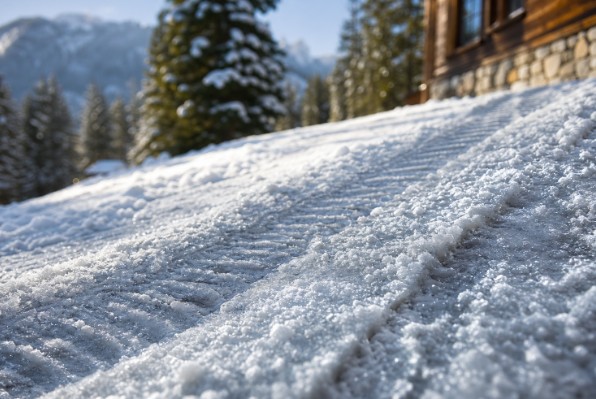
Test Winter Access Before Making an Offer
Road access deserves close attention before you become emotionally attached to a property. Ask whether the road is public, private, shared, gated, or maintained by an HOA. Find out who pays for plowing, grading, tree removal, culvert repairs, and washout restoration. Request copies of any road-maintenance agreement.
- Drive the route yourself and note steep grades, sharp turns, narrow sections, and turnaround space.
- Ask about previous closures, fallen trees, flooding, and emergency access.
- Examine driveway drainage, retaining walls, parking areas, and snow storage space.
- Determine whether winter use realistically requires four-wheel drive, chains, or both.
Review Water, Septic, and Utilities
Water and Septic Questions
Mountain homes may rely on private wells, shared wells, springs, cisterns, or municipal systems. Ask when water was last tested, whether the supply has frozen or run dry, how much water storage exists, and whether recorded water rights or shared-use agreements apply. A qualified septic inspection should confirm the tank condition, the drain field location, the pumping history, the permitted bedroom capacity, and whether there is room for a replacement field.
Other Essential Services
Confirm the heating fuel type, propane tank ownership, delivery terms, electrical service, backup-power options, trash collection, mail delivery, and internet availability. If the home will sit vacant, ask how pipes are protected and whether a local service can check the property after severe weather.
Look for Mountain-Specific Inspection Issues
Choose an inspector familiar with mountain construction and add specialists when needed. General inspections may not fully answer questions about wells, septic systems, chimneys, radon, or structural concerns.
- Roof wear from snow load, ice, wind, and intense sun exposure
- Ice dams, attic ventilation, insulation, and frozen-pipe risks
- Foundation movement from freeze-thaw cycles and poor drainage
- Moisture in crawl spaces, basements, retaining walls, and decks
- Chimney condition, wood stove safety, and combustion ventilation
- Wildlife entry points, insect damage, railings, stairs, and exterior safety
Price Insurance and Hazard Risk Early
Don’t wait until the last minute before closing to find out if your coverage is limited, costly, or unavailable. Request quotes early, and inquire about exclusions such as wildfire, wind, hail, flood, snow load, roof, and short-term rental. Compare deductibles and check whether the insurer requires mitigation work before issuing coverage.
Check Zoning, HOA, and Rental Rules
Never assume a property can be used like a neighboring home. Review zoning, permits, easements, boundary records, shared-driveway agreements, and HOA documents. Verify whether short-term rentals are permitted and whether licensing, occupancy caps, parking rules, design restrictions, or rental limits apply. Ask before planning additions, garages, guest spaces, decks, hot tubs, or major exterior changes.
Build a Realistic Ownership Budget
Your mortgage payment is only one part of the cost. Include property taxes, insurance, heating fuel, electricity, snow removal, road fees, well and septic service, roof and deck maintenance, driveway repairs, wildfire mitigation, property management, and emergency contractor travel. Keep a separate repair reserve, because weather and limited local labor can make urgent work more expensive than expected.
Use a Simple Property Scorecard
After each showing, score the home from one to five in these categories:
- Access: Is winter travel safe and dependable?
- Condition: Are major systems maintained and appropriately updated?
- Utilities: Are water, septic, heat, power, and internet reliable?
- Insurance: Is practical coverage available at an acceptable cost?
- Location: Does the setting support your daily and future needs?
- Resale: Will the home appeal to more than one type of buyer?
Follow a Clear Due-Diligence Timeline
- Before touring: Set your budget, intended use, travel limits, and nonnegotiable features.
- During the tour: Evaluate access, slope, drainage, utilities, noise, and sun exposure.
- Before offering: Request insurance estimates and research zoning, road, HOA, and rental rules.
- During inspections: Schedule home, well, septic, chimney, radon, and specialty inspections as appropriate.
- Before closing: Confirm title, easements, permits, utility transfers, insurance, and maintenance agreements.
Common Questions Buyers Ask
Is 2026 a Good Year to Buy a Mountain Home?
The answer depends on your finances, intended use, holding period, and ability to manage ongoing costs. Focus on the property’s condition, access, insurance, and fit for your life rather than trying to time every market movement.
Should You Choose a Newer Home or an Older Cabin?
A newer home may offer lower near-term maintenance and better energy performance. An older cabin may provide character, but it can require upgrades to systems, insulation, drainage, and safety features. Compare total ownership costs, not just the purchase price.
Final Checklist Before Writing an Offer
- Confirm your intended use and realistic ownership budget.
- Test the route, driveway, parking, and winter access.
- Request an insurance quote and review hazard considerations.
- Verify the water, septic, utilities, road, and HOA agreements and rules.
- Plan inspections that match the property’s systems and setting.
Conclusion
Buying a mountain home requires careful planning beyond choosing a scenic property. By evaluating access, utilities, insurance, maintenance, and long-term ownership costs before making an offer, you can make a more informed decision. Thorough due diligence helps ensure your mountain home supports your lifestyle, budget, and goals for years to come.
